

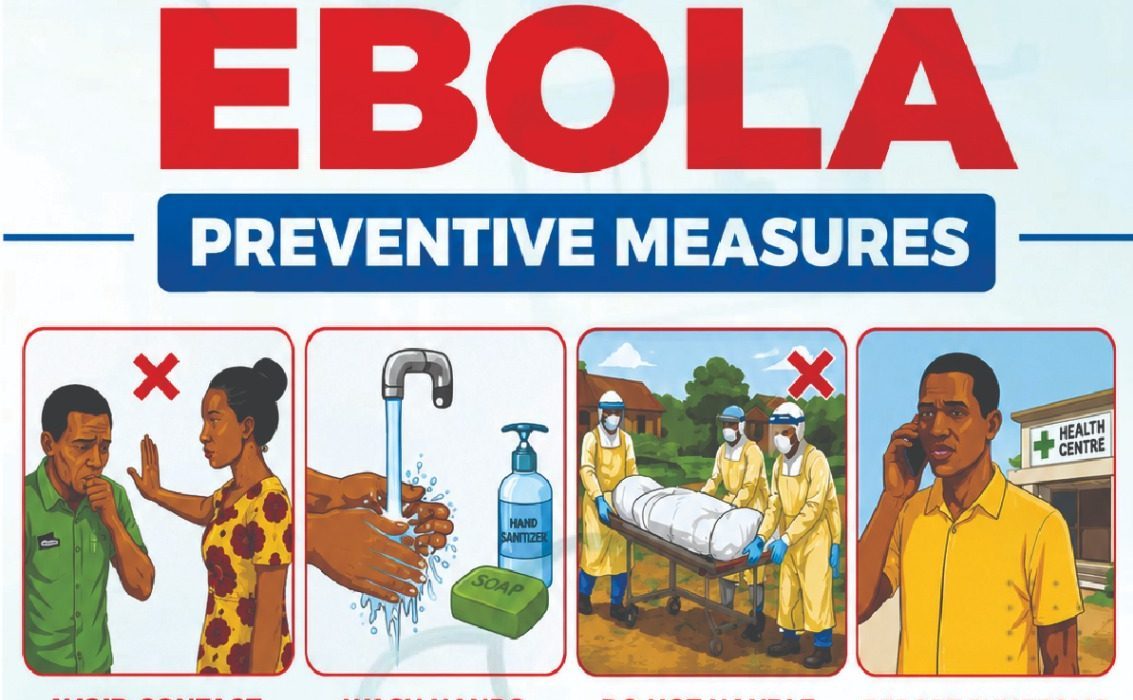
PROTOCOLS FOR PREVENTION OF EBOLA
Ebola Virus Disease (EVD) is a highly infectious and often fatal viral hemorrhagic disease transmitted through direct contact with infected persons, body fluids, contaminated materials, or infected animals. Universities are vulnerable environments due to high population density, shared classrooms, social gatherings and movement of students and staff.
The purpose of these protocols is to:
- Prevent introduction of Ebola into the university community.
- Protect students, staff, visitors, and surrounding communities.
- Ensure coordinated emergency response and continuity of university operations.
These protocols apply to Students, Academic staff, Administrative and support staff, Visitors, contractors, and the University Health Centre and laboratory.
Entry screening is conducted at the main university gates, Health facilities and the library.
Screening Measures
- Temperature monitoring using non-contact thermometers.
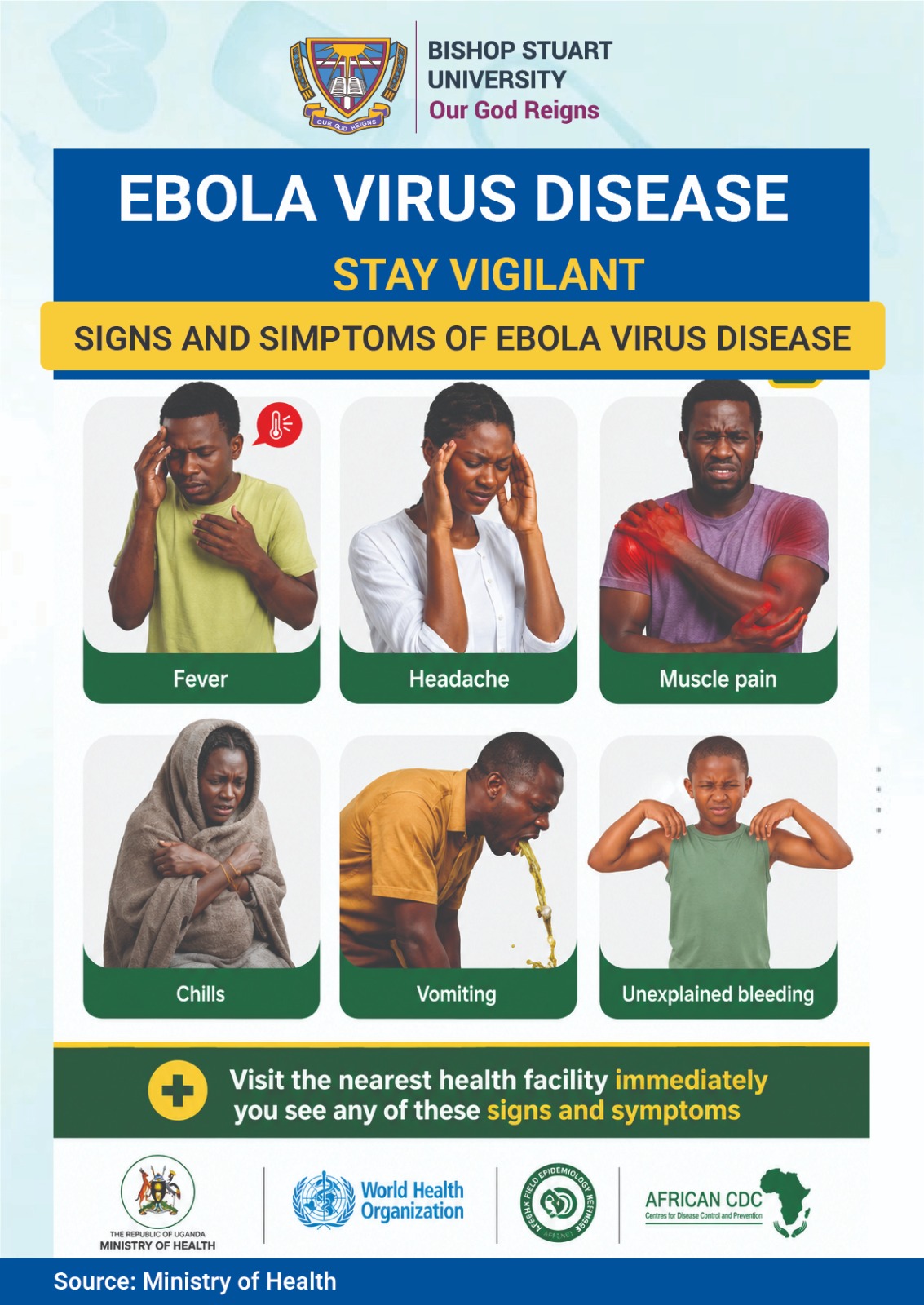
- Observation for symptoms such as: Fever, Vomiting, Diarrhea, Bleeding, Severe weakness, Headache, Muscle pain
Reporting of Suspected Cases
Any person with Ebola-like symptoms should:
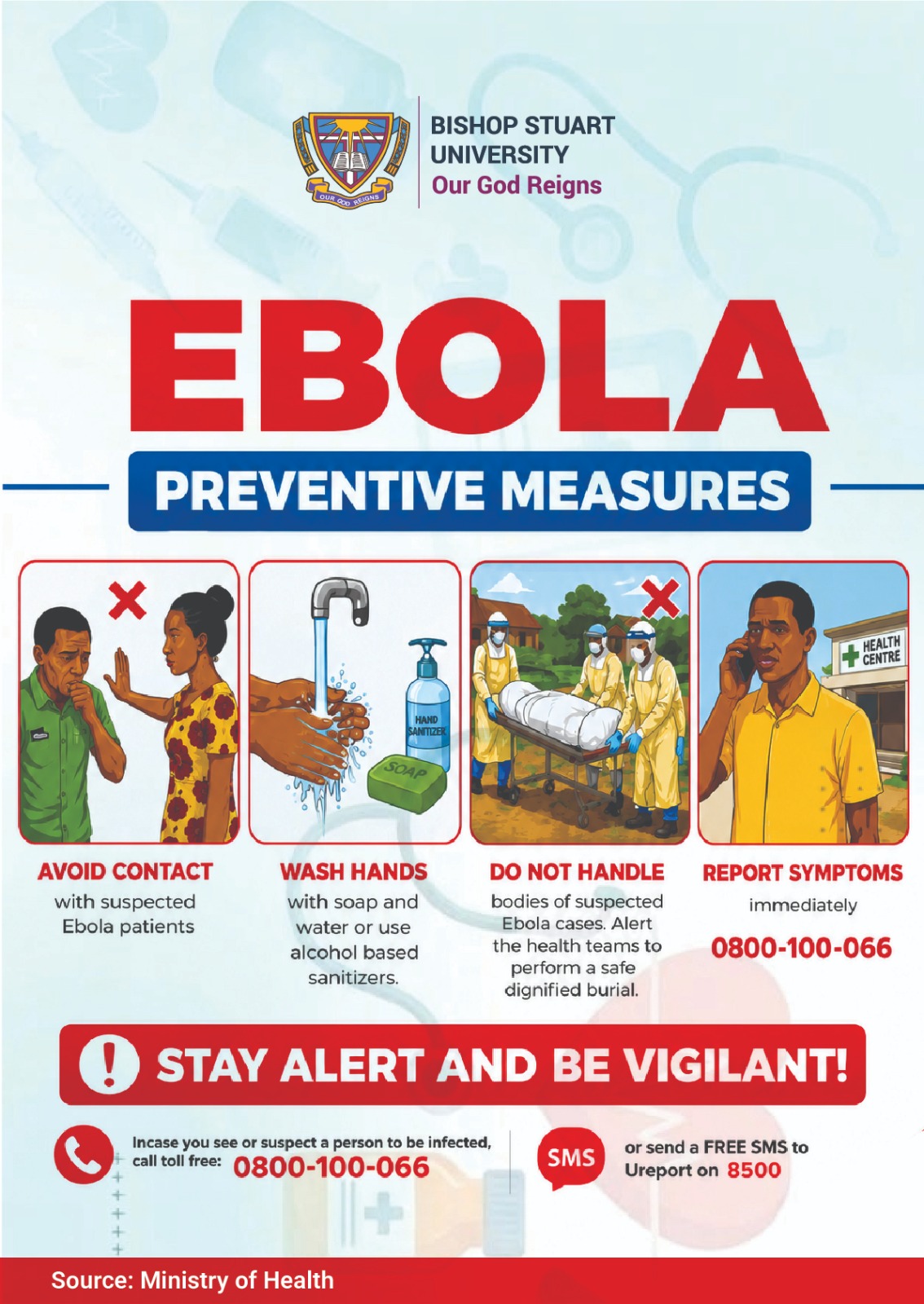
- Immediately report to the university health centre.
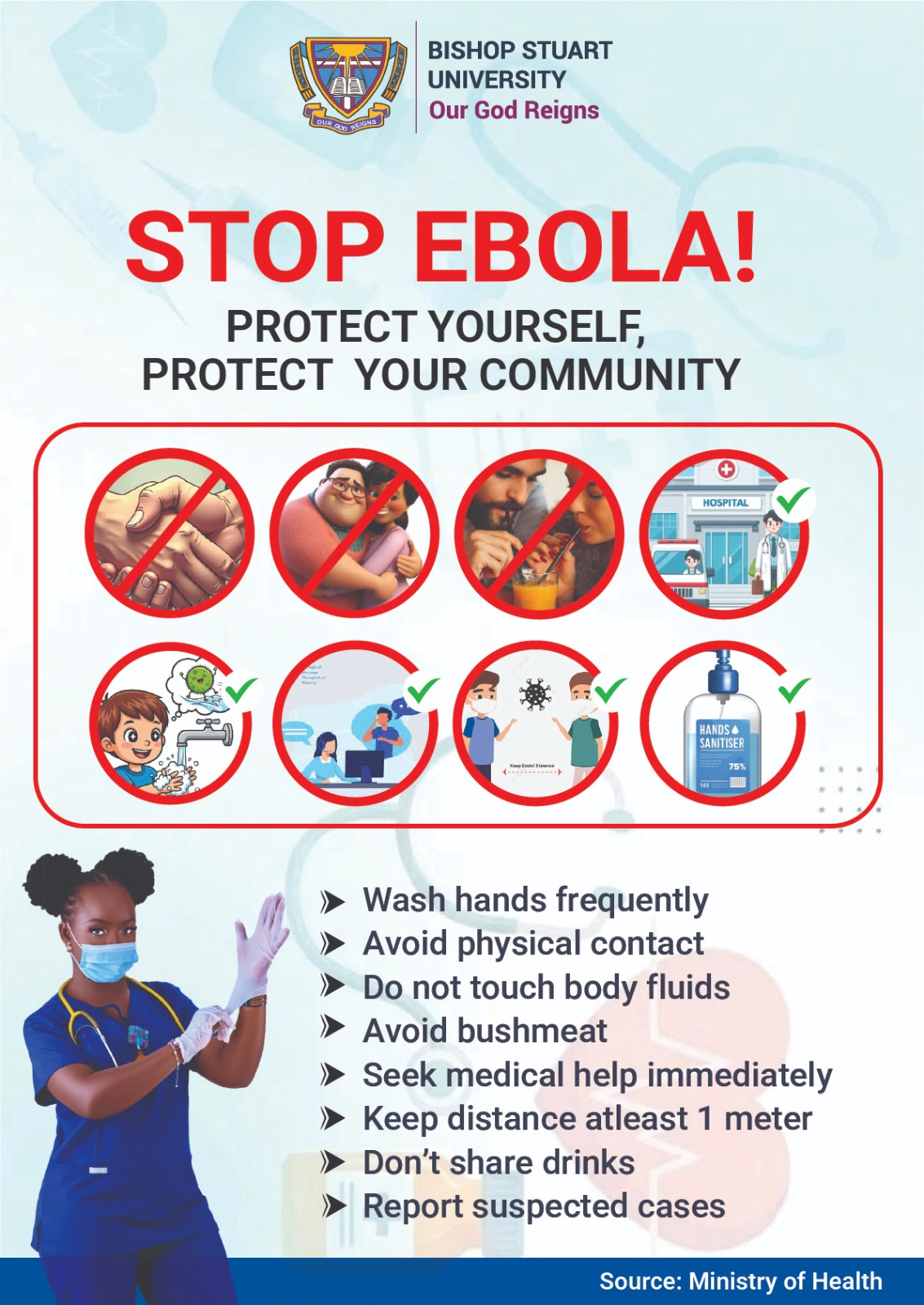
- Avoid contact with others.
- Avoid attending classes or gatherings.
Staff and students must immediately report suspected cases to:
- University health services
- University administration
- District surveillance teams
Infection Prevention and Control (IPC) Measures
i) Hand Hygiene
The university has:
- Installed hand washing facilities with soap and clean water at strategic points.
- Provided alcohol-based hand sanitizers in offices, lecture rooms and libraries
ii) Hand washing is Mandatory:
- Before entering buildings.
- After toilet use.
- After touching shared surfaces.
- After caring for sick individuals.
iii) Cleaning and Disinfection
- Frequently touched surfaces are disinfected daily by Chlorine solution, including Door handles, Desks and Toilet facilities
iv) Protection of Cleaning Staff
Cleaning personnel must:
- Wear appropriate personal protective equipment (PPE).
- Receive infection prevention training.
- Follow safe waste handling procedures.
v) Management Procedure
When a suspected case is identified:
- Immediately isolate the person.
- Inform district health authorities immediately.
- Arrange safe referral to designated Ebola treatment facilities.
- Identify and document close contacts.
vi)Awareness Activities
The university conducts continuous sensitization through:
- Posters and banners
- Social media platforms
- Student orientation programs
- Emails alerts
INFOGRAPHICS
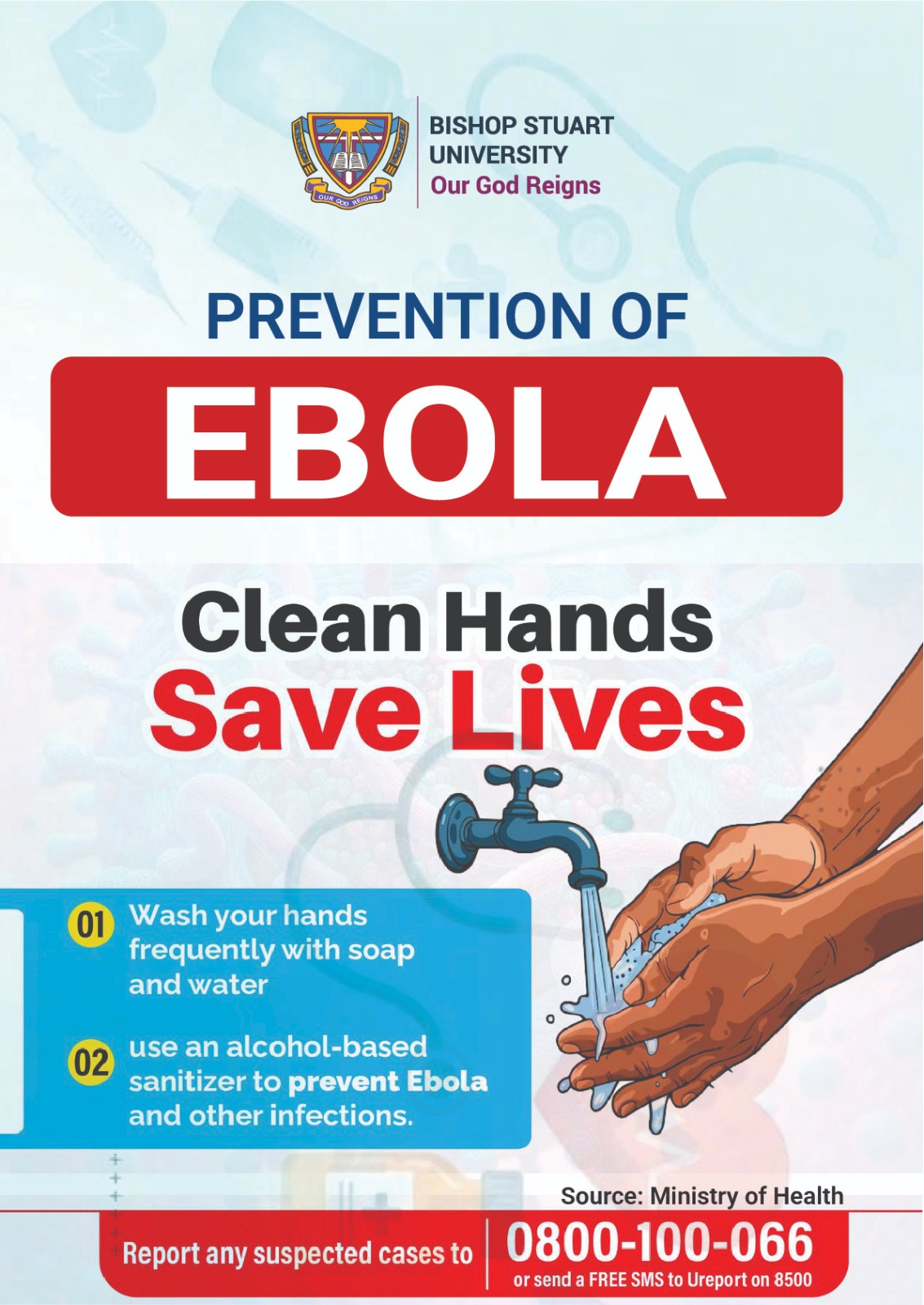
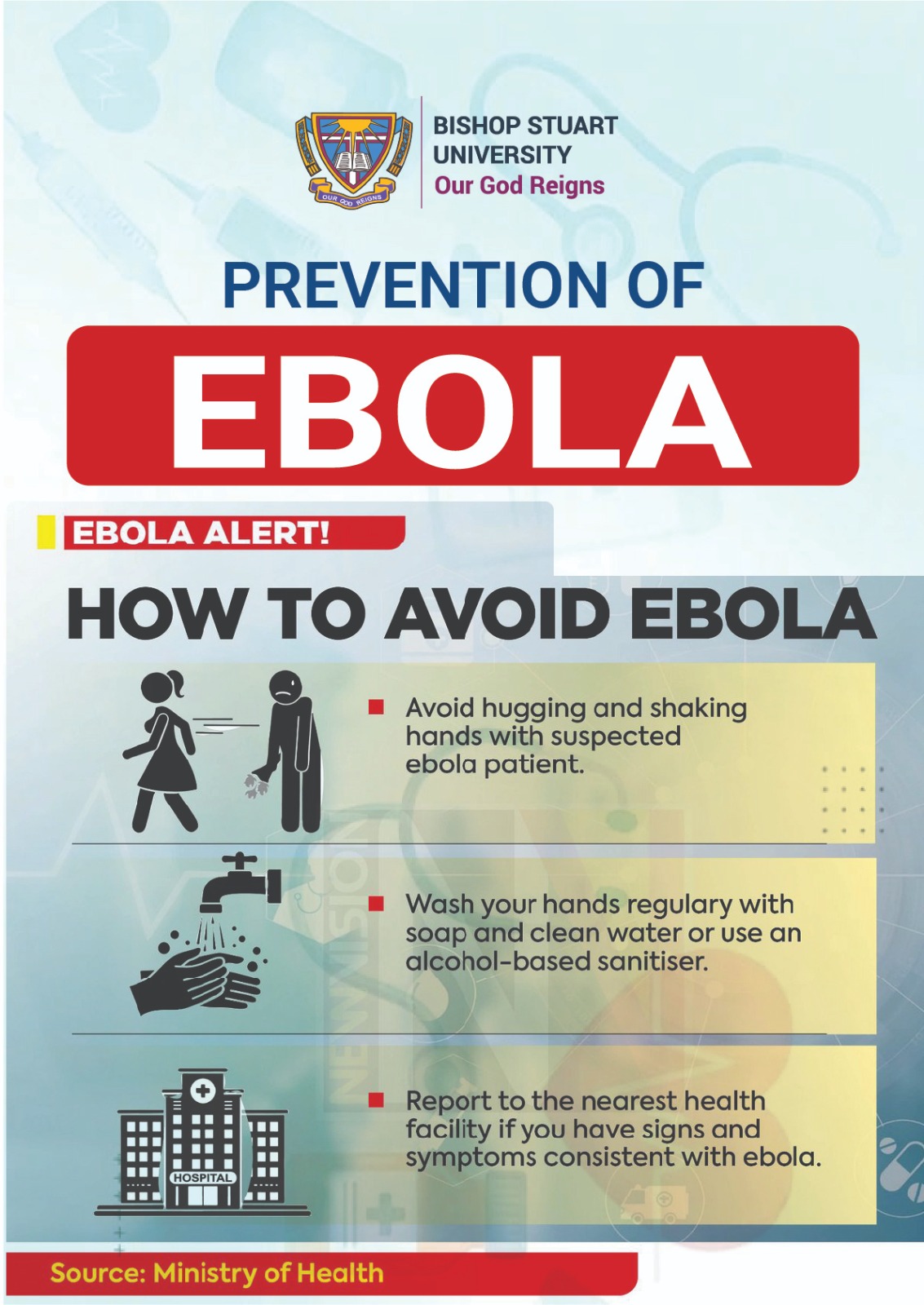
See Ministry of Health Press Statements on EBOLA
See Ebola MoH Dashboard https://evd-daily.health.go.ug/